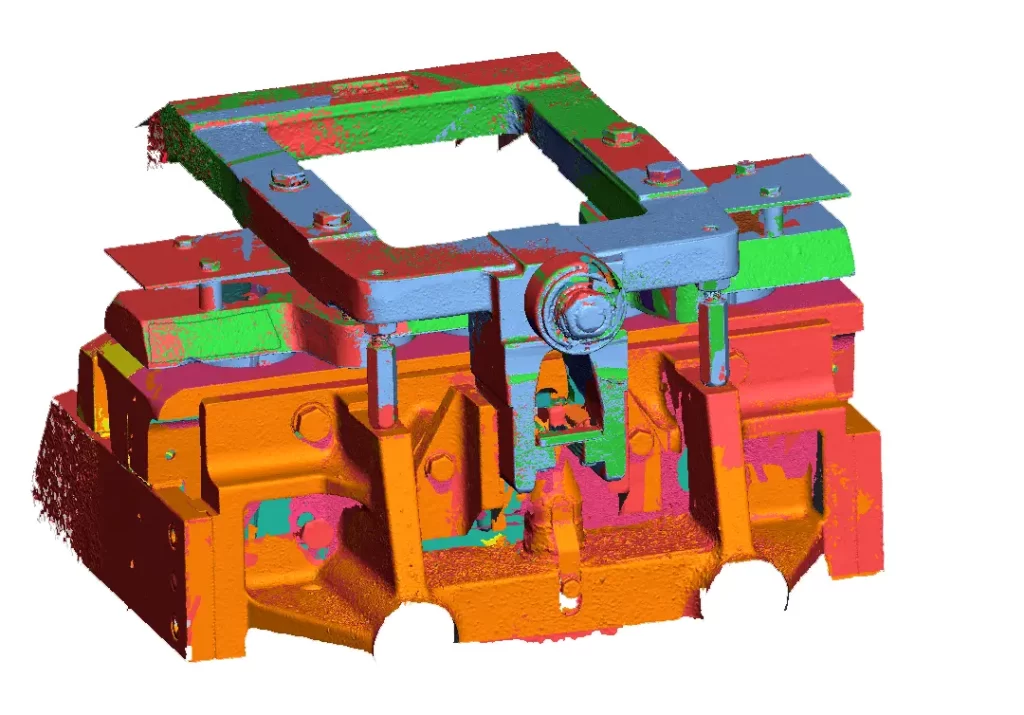
The reverse engineering process of the ice cream cone mold began with a non-contact 3D scan performed directly on the machine, with the mold still installed in its operational position. This approach allowed the acquisition of real geometric conditions, including alignment, assembly constraints, and any deformation or wear introduced during service. Due to the presence of occlusions and undercuts, multiple scan passes were required to ensure sufficient data coverage.
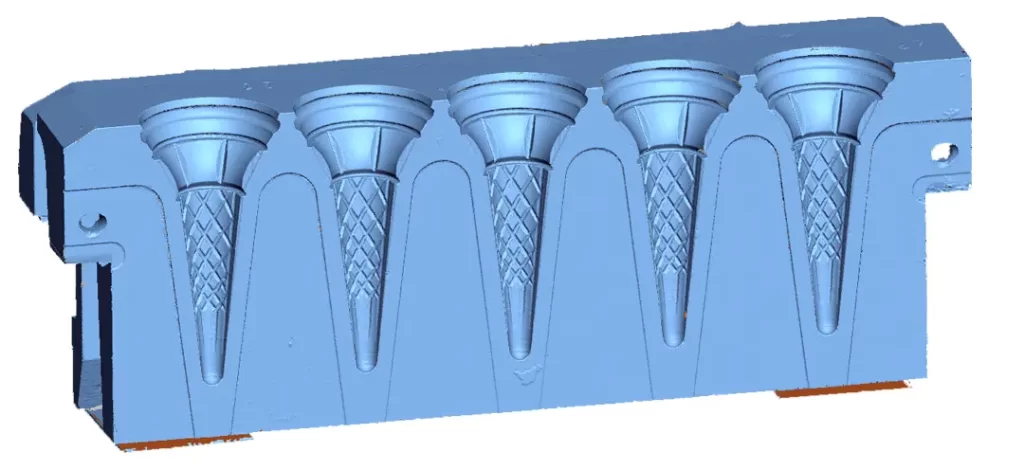
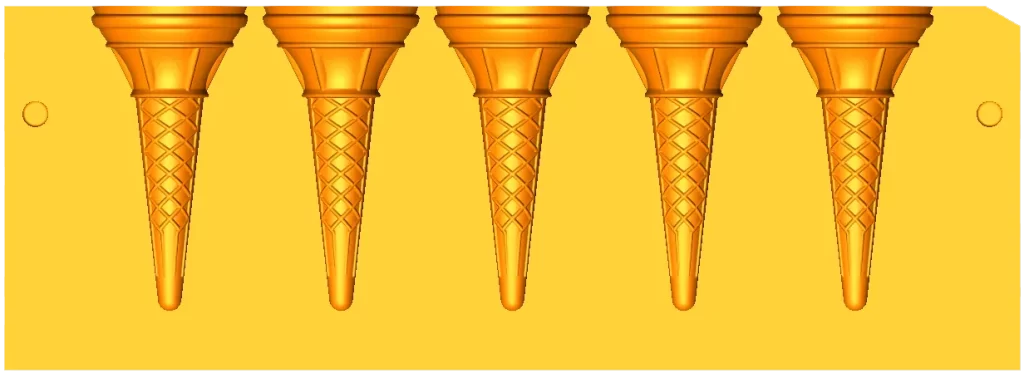
The resulting STL mesh was then processed and aligned, separating individual components and reconstructing their spatial relationships. From this data, a full CAD model was rebuilt using a hybrid modeling approach, combining parametric features with surface reconstruction. Particular attention was given to the cone geometry, radial patterns, and mating interfaces between male and female parts, ensuring both geometric fidelity and manufacturability.
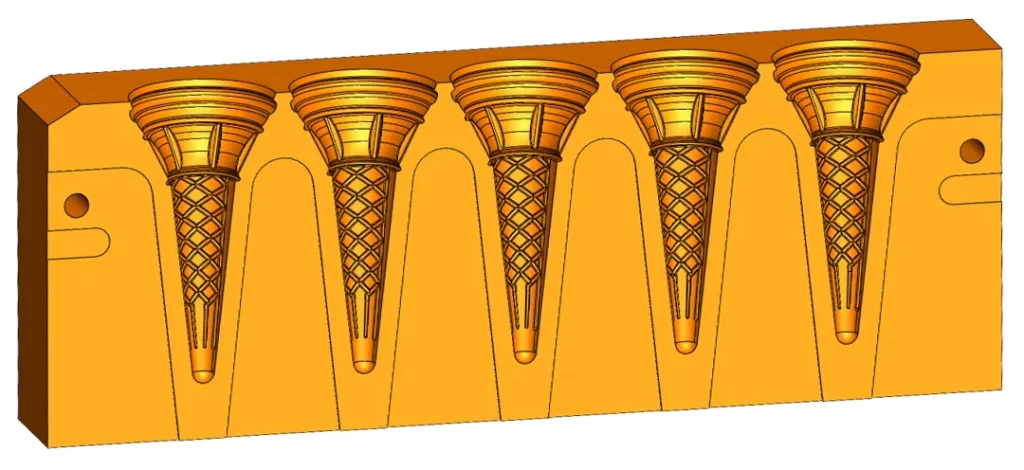
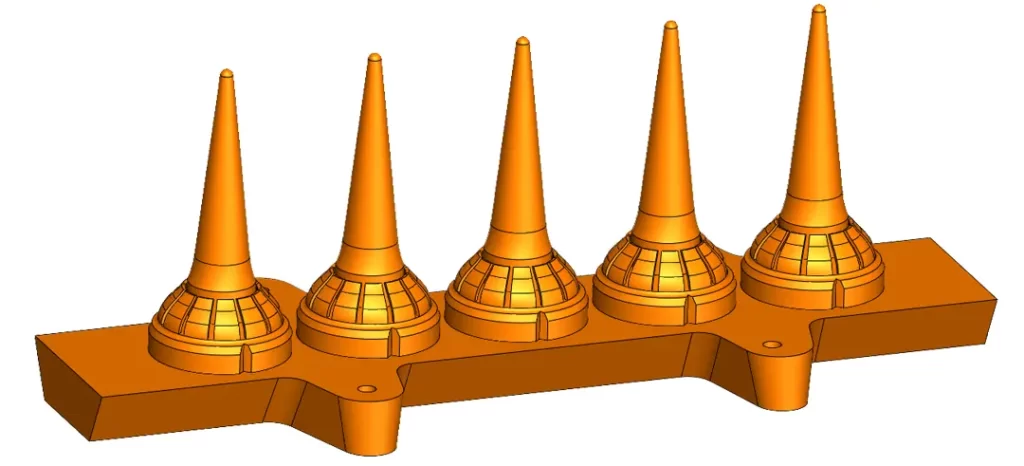
The final CAD model provides a clean, editable, and production-ready representation of the mold, suitable for redesign, validation, or replication.
Need Reverse Engineering Support or Want to Master the Process?
Whether you require accurate 3D scanning and CAD reconstruction or you’re looking to learn a structured, method-driven approach to reverse engineering, we can help.
📐 Professional Services
High-precision reverse engineering for industrial components, mold tooling, and complex geometries, from scan to production-ready CAD.
🎓 Consultancy & Training
Learn how to approach reverse engineering as a technical interpretation process, not just CAD modeling. Ideal for engineers, designers, and companies building internal capability.
🌐 Get in touch
Explore services, case studies, and training opportunities: