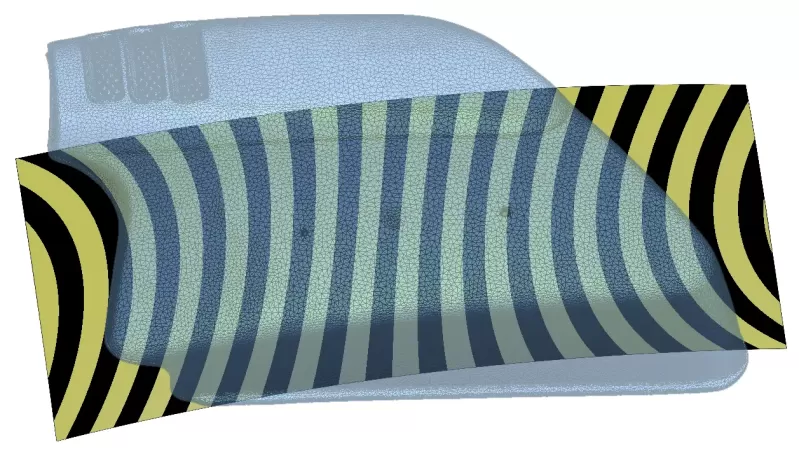
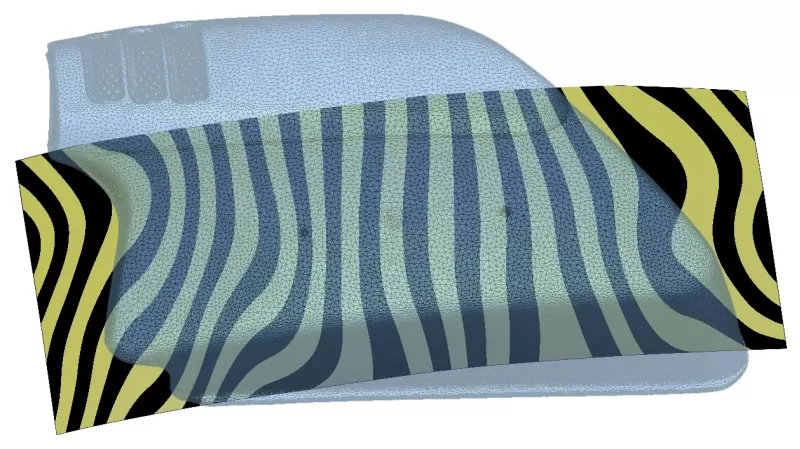
The real problem is not scanning. It’s reconstruction.
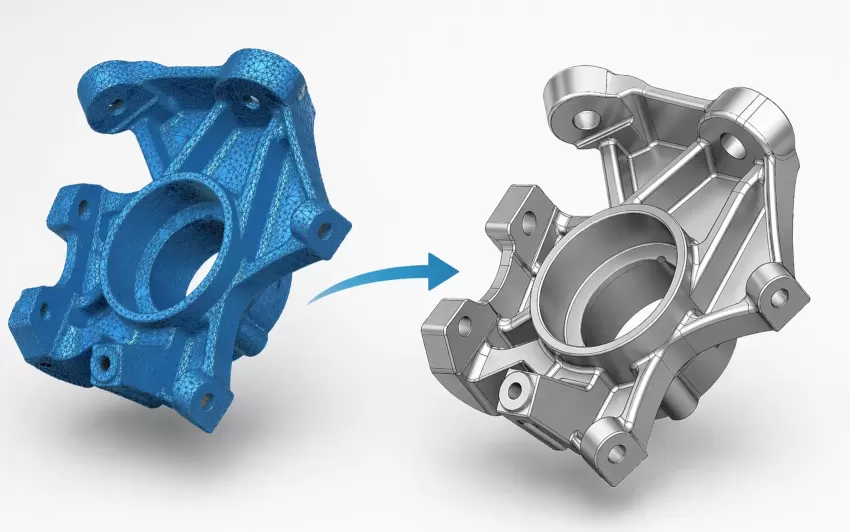
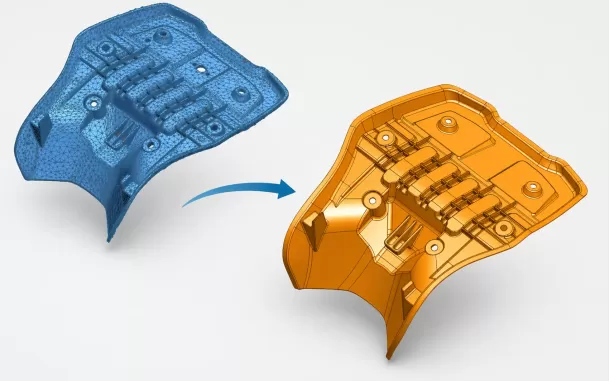
Struggling with STL to CAD? Get expert support to turn 3D scans into reliable CAD and improve your internal workflow. A scan gives you data. It does not give you a usable model.
Reverse engineering from STL requires:
- understanding which geometry can be parametric, and which cannot
- reconstructing surfaces that are driven by function, not features
- building CAD that remains stable under modification
- preserving intent, not just shape
Without this, even high-quality scans lead to poor engineering outcomes.
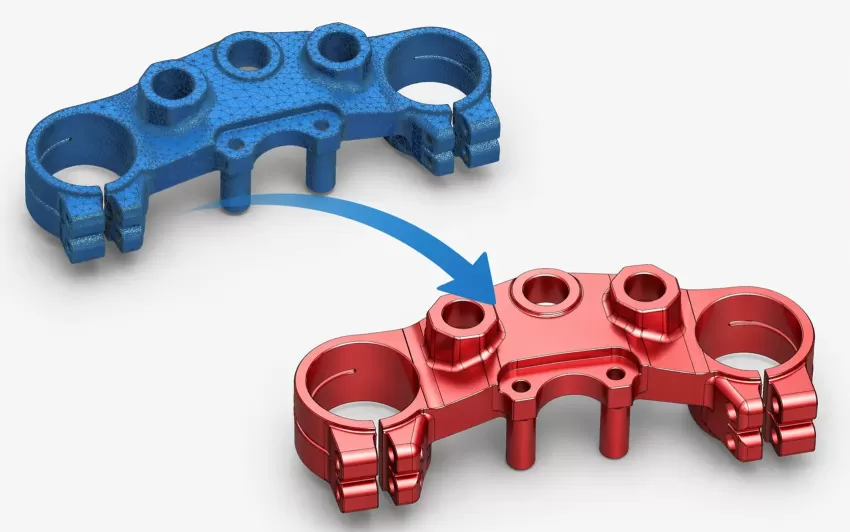
What You Get
A combined consultancy + targeted training approach, built around your real components and workflows.
1. Workflow assessment
- Review of current scan-to-CAD process
- Identification of failure points (geometry, tools, decisions)
- Clear recommendations for improvement
2. Live project support
- Work on real parts (not generic exercises)
- Demonstration of reconstruction strategies on your data
- Hybrid workflows: parametric + SubD where needed
3. Targeted technical training
Focused sessions based on your actual challenges:
- STL to CAD reconstruction strategies
- Section extraction for analysis and validation
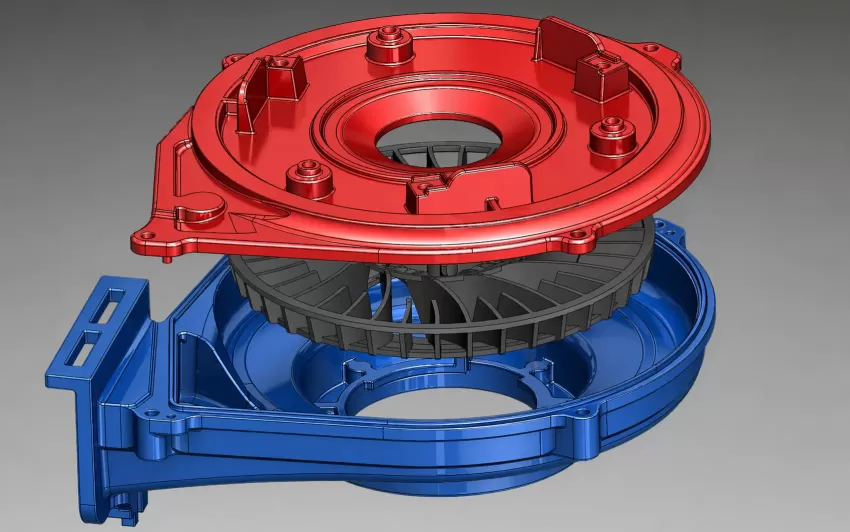
- Handling complex geometries (impellers, cast parts, organic transitions)
- Avoiding unstable or over-constrained models
- Preparing geometry for manufacturing or 3D printing
4. Internal capability building
- Guidelines tailored to your team
- Repeatable workflows
- Decision-making framework for different geometry types
Scope of Support
A combined consultancy + targeted training approach, built around your real components and workflows.
1. Workflow assessment
- Review of current scan-to-CAD process
- Identification of failure points (geometry, tools, decisions)
- Clear recommendations for improvement
2. Live project support
- Work on real parts (not generic exercises)
- Demonstration of reconstruction strategies on your data
- Hybrid workflows: parametric + SubD where needed
3. Targeted technical training
Focused sessions based on your actual challenges:
- STL to CAD reconstruction strategies
- Section extraction for analysis and validation
- Handling complex geometries (impellers, cast parts, organic transitions)
- Avoiding unstable or over-constrained models
- Preparing geometry for manufacturing or 3D printing
4. Internal capability building
- Guidelines tailored to your team
- Repeatable workflows
- Decision-making framework for different geometry types
Scan-to-CAD Consultancy
Turn your 3D scan data into reliable, production-ready CAD
Many companies already have a 3D scanner.
The real bottleneck is what happens after the scan.
Meshes are captured, but:
- CAD models are unstable or unusable
- Geometry is approximated instead of interpreted
- Internal know-how is inconsistent across the team
- Time is lost rebuilding parts that still don’t behave correctly
This is where most reverse engineering workflows break down.