Industry
- Automotive
What We Did
- 3D Scanning
- Reverse Engineering
- Exporting data: both STL + STEP
Project Details
-
Restoring Design Intent from a Worn Component
-
3D Scanning Accuracy: ± 0.05 mm
Final CAD Accuracy: ± 0.3 mm (Average). Local deviations may vary depending on geometry and feature accessibility


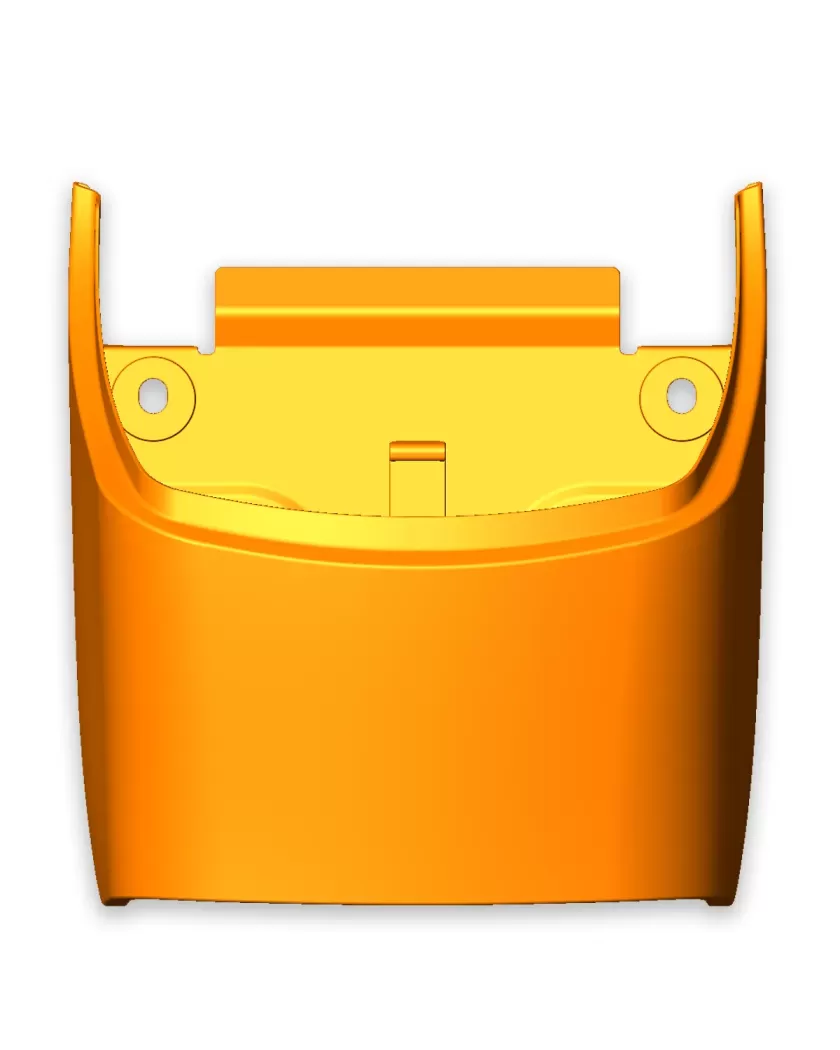
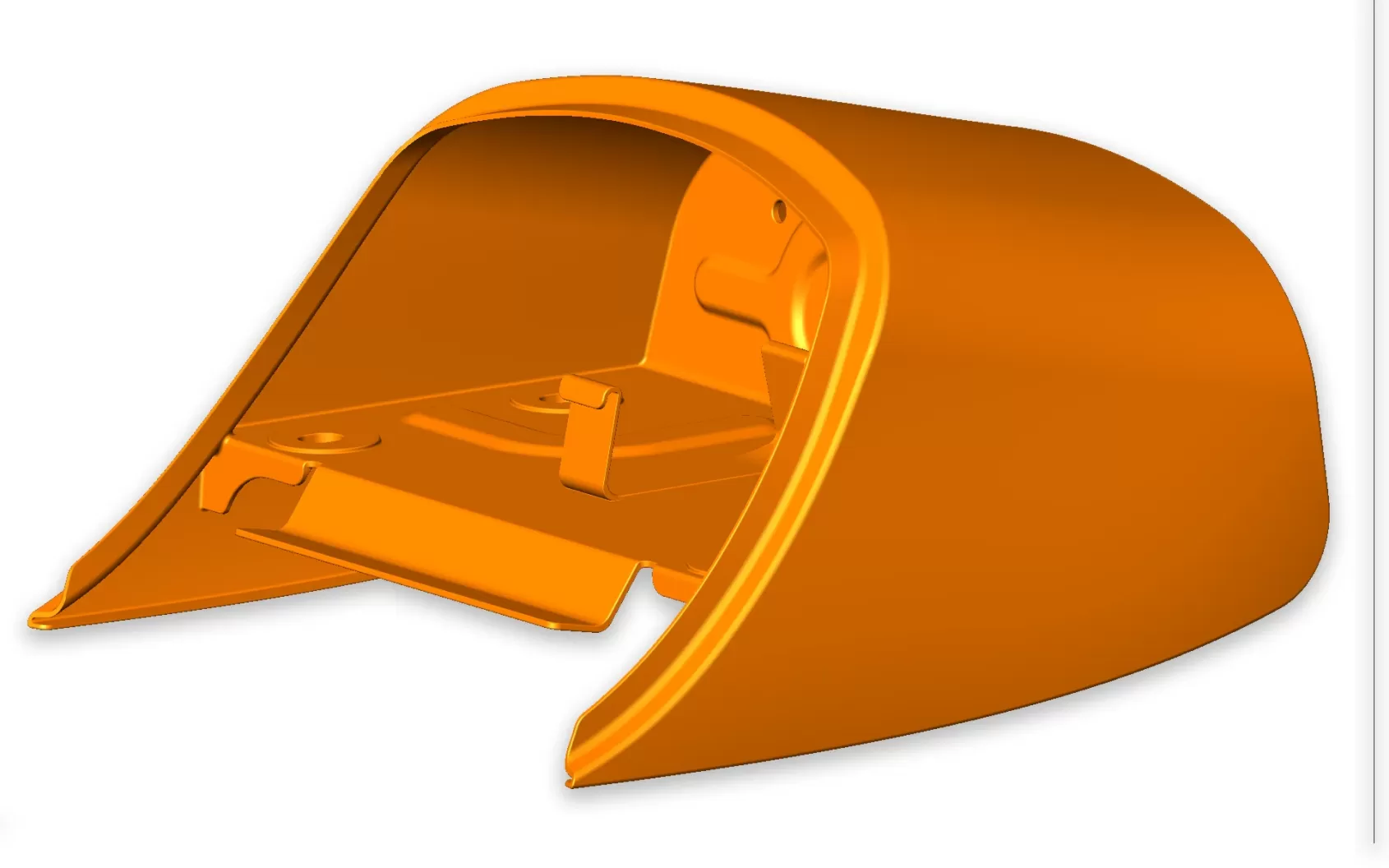
In this project, a vintage motorcycle tail section, manufactured from folded sheet metal and likely dating from the late 1970s to early 1980s, was reconstructed into a fully parametric CAD model starting from the 3D scan of a real component. The part exhibited typical signs of ageing, including local deformation, surface irregularities and slight asymmetries resulting from both original manufacturing tolerances and prolonged use.
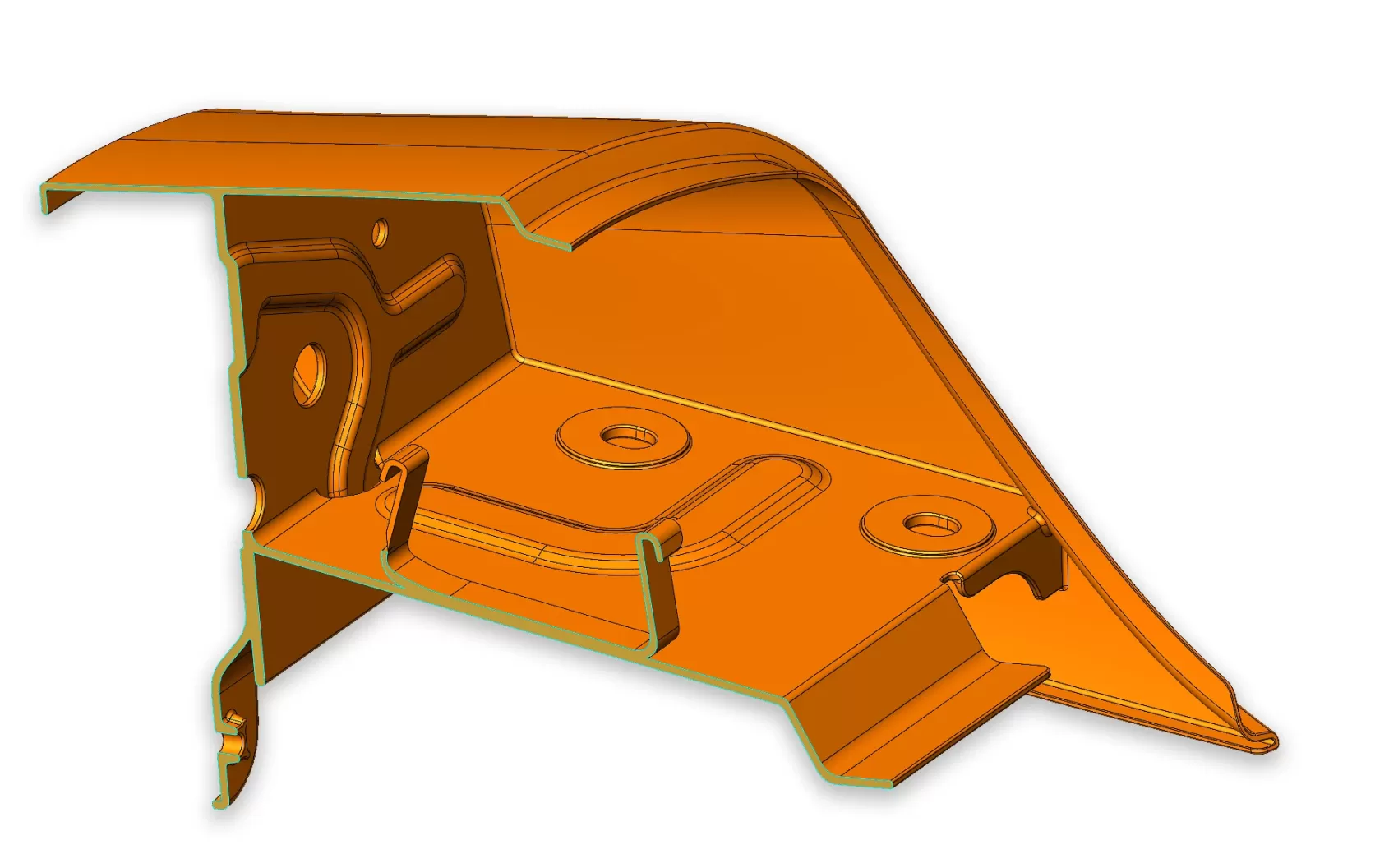
Given the nature of bent sheet metal components, the scanned geometry did not represent an ideal or perfectly repeatable shape. Variations in curvature, edge alignment and fold transitions were evident, particularly in areas subject to stress or manual adjustment over time. One of the main challenges was therefore to interpret the underlying design intent while distinguishing it from deformation accumulated during the component’s lifecycle.
The reconstruction was carried out using a hybrid approach, combining surface and solid modelling within a fully parametric framework. This allowed critical features to be controlled and adjusted where necessary, while maintaining adherence to the real geometry where functional constraints required it. Certain regions were regularised to restore continuity and coherence, whereas others were intentionally preserved as captured to ensure proper integration with the rest of the motorcycle assembly. Particular attention was given to the folded areas, where bend radii and transitions are influenced not only by design but also by manufacturing processes. These characteristics were carefully interpreted and translated into the CAD model, reflecting both the original construction logic and the physical behaviour of the material.
The objective of the project was to generate a reliable digital model suitable for additive manufacturing. The final geometry was therefore structured and validated with 3D printing in mind, ensuring that the reconstructed component could be reproduced accurately while maintaining its functional and visual characteristics. This work demonstrates how reverse engineering, especially in the context of legacy components, is not a simple duplication of scan data but a process of technical interpretation. It requires balancing geometric accuracy, manufacturing logic and end-use requirements in order to produce a meaningful and usable result.