Industry
- Industrial Design
What We Did
- 3D Scanning
- Reverse Engineering
- Exporting data: STL to STEP
Project Details
-
Legacy Mobile Phone plastic Cover (1990s) Interpretingand Reconstructing Design Intent
-
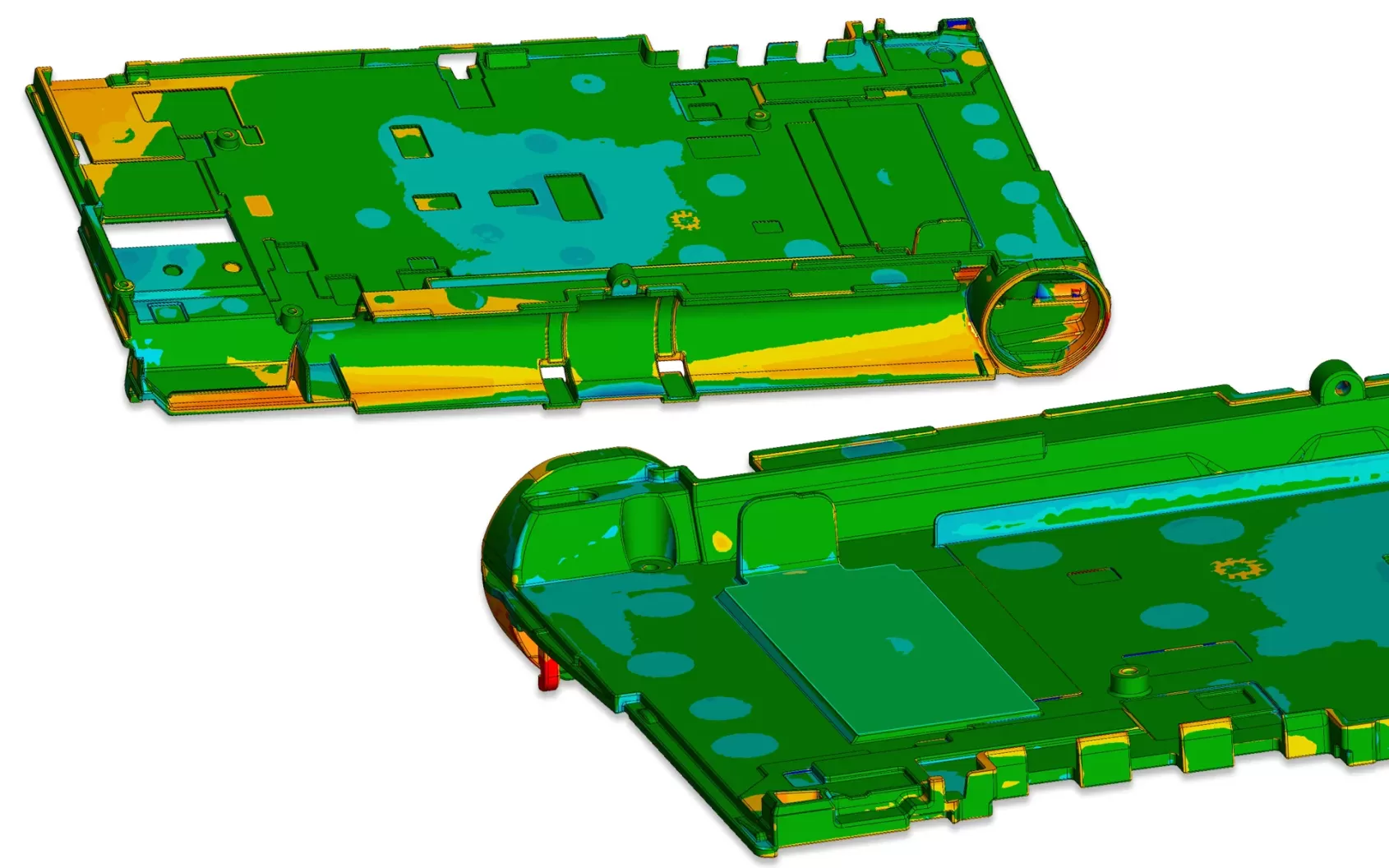
3D Scanning Accuracy: ± 0.02 mm
Final CAD Accuracy: ± 0.03 mm (Average). Local deviations may vary depending on geometry and feature accessibility

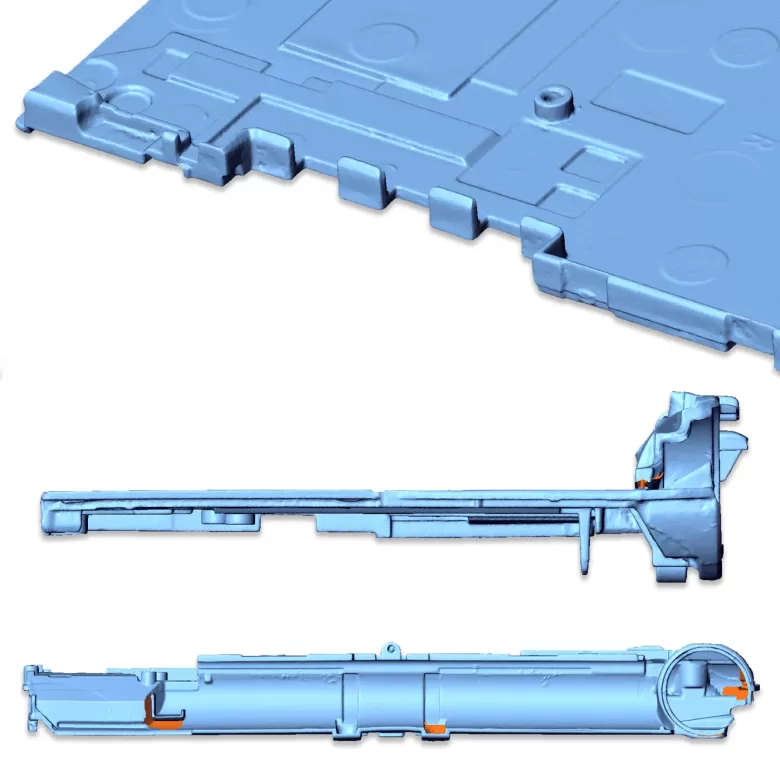
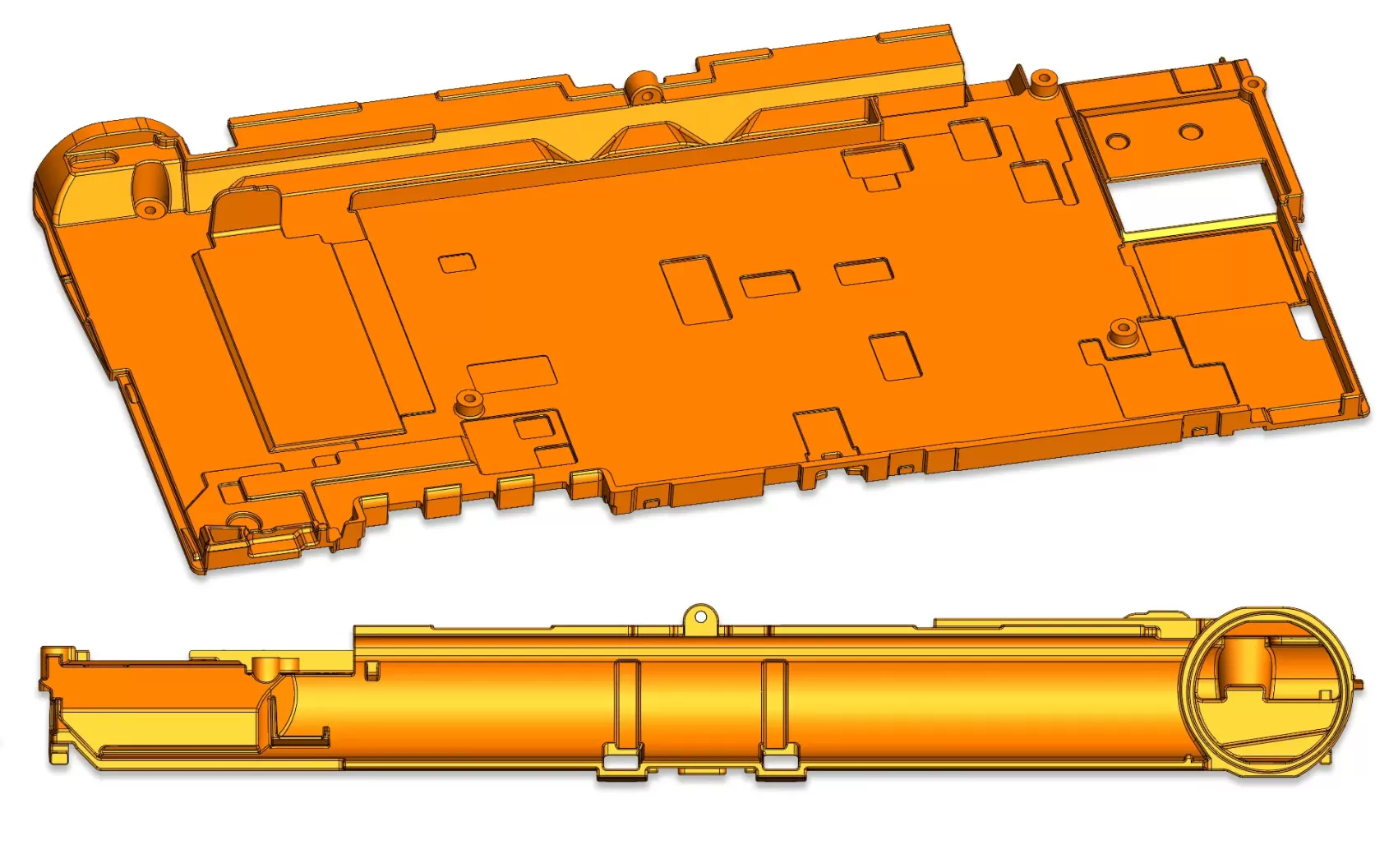
This project focused on the reverse engineering of a small plastic cover from a 1990s mobile phone, characterised by a dense concentration of fine internal features, ribs, clips, bosses, and alignment details, critical to its mechanical function and assembly.
Due to the scale and intricacy of these elements, the acquisition phase was carried out using a high-resolution 3D scanner specifically designed for small objects. This enabled the capture of subtle geometric variations and micro-features that would not be reliably detected with standard scanning systems. The original physical component presented several challenges: localised deformation, wear, and material fatigue had compromised portions of the geometry, particularly in structurally sensitive areas. As a result, the scan data was treated strictly as a geometric reference rather than a direct modelling input.
The CAD reconstruction was developed entirely through parametric, feature-based modelling. Each functional element, snap fits, internal supports, wall thickness transitions, was rebuilt with intent, ensuring full editability and control over dimensional relationships. Where the scanned geometry deviated due to damage, the model was systematically normalised by interpreting the original design logic, restoring symmetry, alignment, and manufacturable conditions.
The outcome is a clean, production-ready CAD model that reflects the original engineering intent rather than the degraded state of the physical part. This allowed for accurate reproduction through 3D printing, enabling the component to be reintroduced into use while preserving its functional integrity.
Key aspects:
- High-resolution 3D scanning for micro-scale feature acquisition
- Interpretation-driven modelling approach (3D scan as reference)
- Fully parametric CAD reconstruction for editability and control
- Geometric normalisation of damaged and deformed regions
- Output optimised for additive manufacturing and functional reuse