Industry
- Tooling & Mold
What We Did
- 3D Scanning
- Reverse Engineering
- Exporting data: STL to STEP
Project Details
-
Composite Seat Mould
Hybrid CAD Reconstruction for CNC -
3D Scanning Accuracy: ± 0.05 mm
Final CAD Accuracy: ± 0.1 mm (Average). Local deviations may vary depending on geometry and feature accessibility


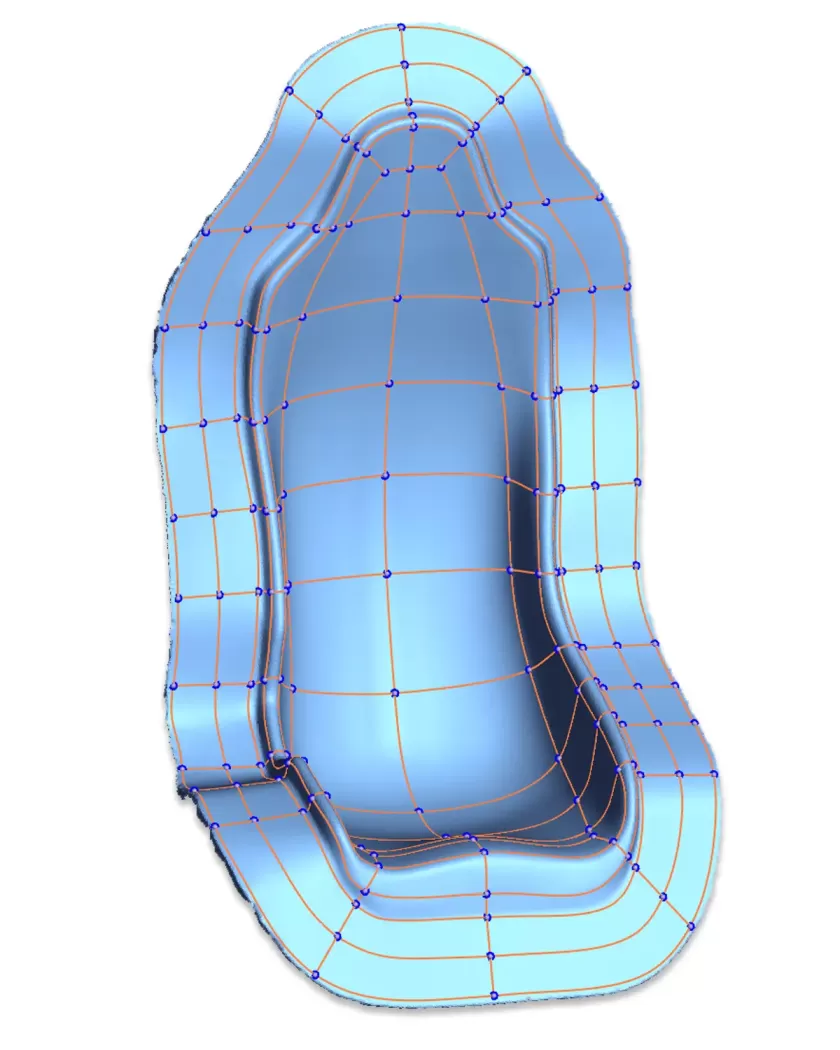
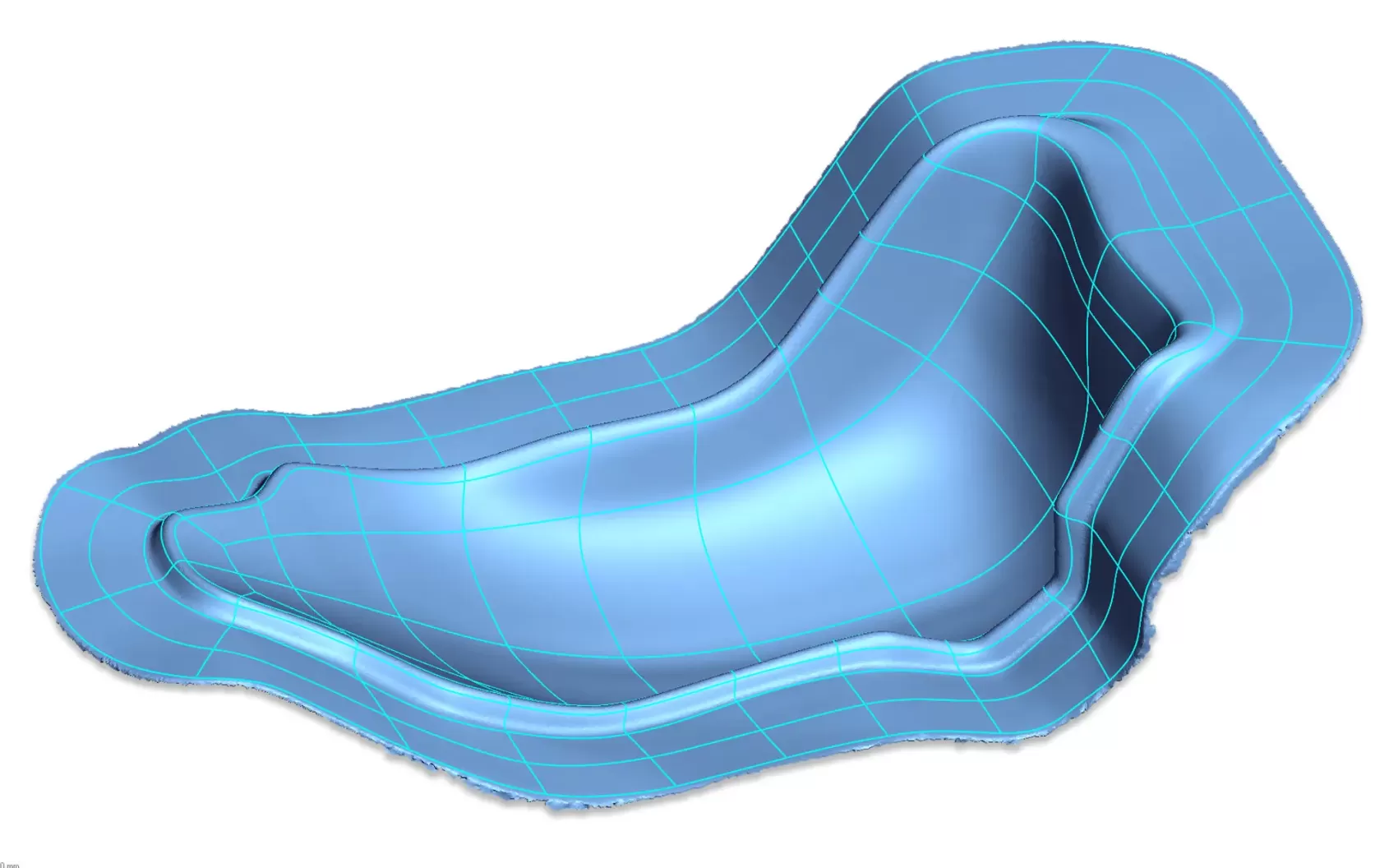
The reverse engineering of a composite mould for a sports car seat required a controlled reconstruction workflow, starting from high-resolution 3D scan data and leading to a production-ready CAD model for CNC machining. The workflow began with high-resolution 3D scanning, used to capture the full geometry of the mould, including its organic seating surfaces and peripheral features. The scan was treated as a reference dataset, supporting a controlled reconstruction rather than a direct mesh conversion.
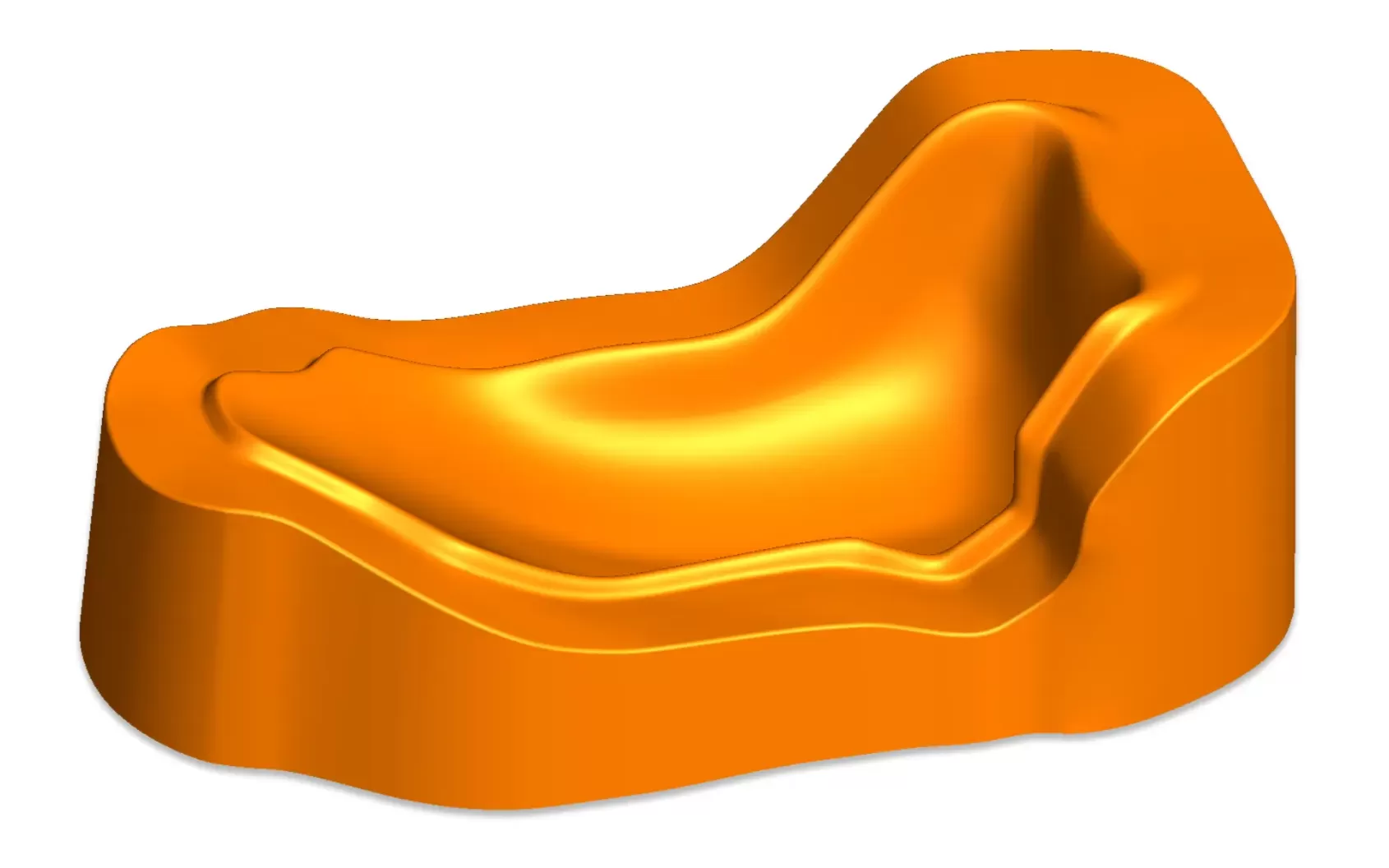
A hybrid modelling approach was adopted, combining parametric solid features with surface modelling techniques. This allowed precise control over complex transitions and curvature continuity, particularly across the seating area where smooth, uninterrupted surfaces are critical. From the identified parting line, surfaces were extended tangentially and adjusted to introduce an appropriate draft angle, ensuring manufacturability and correct release behaviour. The geometry was then closed into a watertight solid model, maintaining consistency between functional and aesthetic regions.
Additional refinements were introduced during reconstruction, including the rationalisation of edge conditions and the optimisation of surface flow, improving both machining strategy and final tool quality. The resulting CAD model was delivered as a STEP file and subsequently used within a CAM environment for CNC machining. The approach ensures a robust and editable dataset, suitable for tooling applications in composite manufacturing workflows.