Telephone: +44 01474 550 934
info@thinkscan.co.uk

Reverse engineering
Brochure Download
Please click the download button to get the brochure file
Contact Us
If you have any queries about our service please contact us. For international 3D scanning projects, we also collaborate with 3Dgate
- +44 01474 550 934
- 3D Scanning workshop: Hawkspare 2 Green Street Green Rd, Dartford DA2 8DP Kent, United Kingdom
- info@thinkscan.co.uk
Service Details
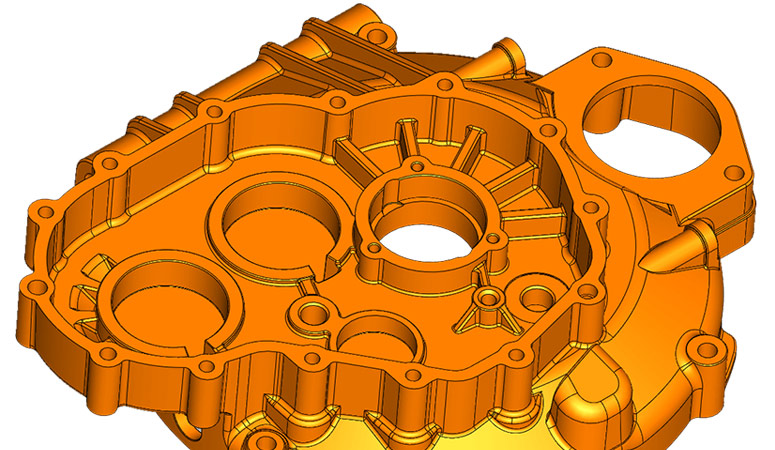
If you need to redesign a part without technical 2D drawing, our CAD Reverse Engineering service can help. For the Reverse Engineering stage we use either Geomagic Design X (parametric CAD redesign) SolidWorks, Geomagic Wrap, Rhinoceros and Autodesk Fusion 360. All CAD files can be exported in several file format such as Iges, Step, Parasolid, Acis and Solidworks (native file).
Open vs Watertight
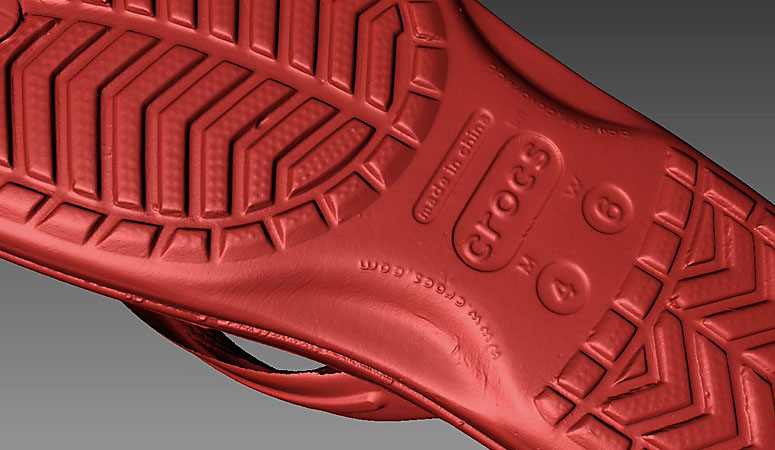
A 3D scan file can be 'open' or 'watertight'. A watertight 3D file is when the 3D scanner is able to capture 100% of the physical part. Some items can contain hidden areas and/or undercuts. Therefore, it will not always be possible to generate watertight 3D scan data.
For 3D printing or CNC milling, watertight 3D scan data is mandatory and Reverse Engineering is usually required but not always mandatory. In order to make the 3D scan data suitable for 3D printing the easiest option is to CAD redesign the part from 3D scanned data, this is Reverse Engineering ie, 3D scan data is used as 'guide' to recreate the original design intent. Please note: 3D Scanning is a precursor for Reverse Engineering and there is no R.E. without the scan first.
Service Included
- STEP/IGES Conversion from 3D Scan data
- Exporting to Parasolid
- Exporting to CATIA
- Support via email
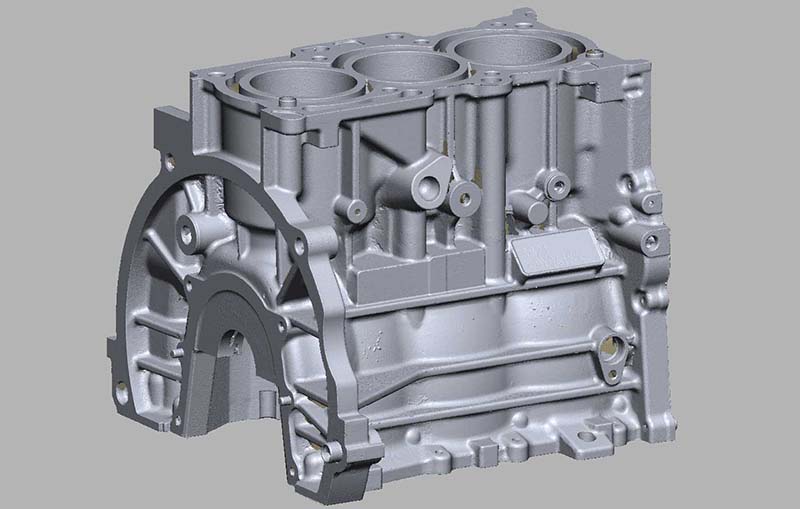
3D Scan data (STL file)
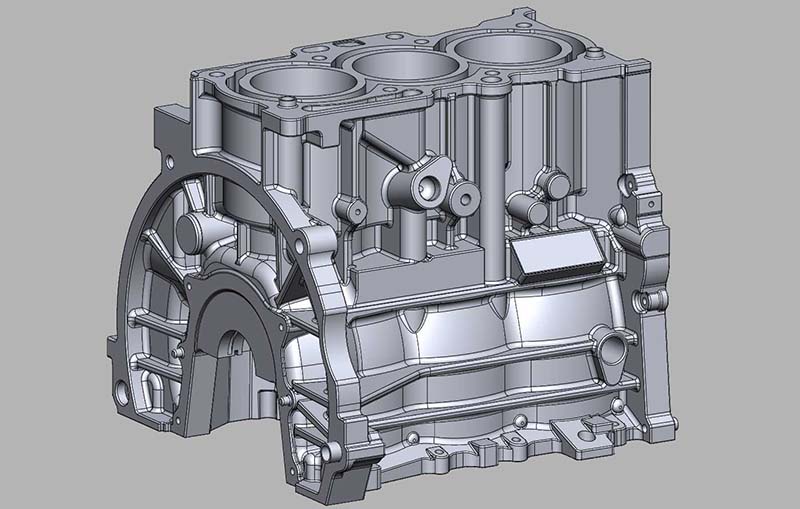
CAD R.E. (STEP file)
Frequently Asked Question
Reverse Engineering (R.E.) is the process of measuring a physical part using 3D data acquired by our 3D non-contact 3D scanners. At Thinkscan we are able to CAD redesign a wide range of parts for further engineering. Files converted from scanned data can be exported in several file format such as Iges, Step, Vda, Parasolid, Acis & Solidworks native file with full History Tree. In other words, 3D scanning is the fastest way to collect data from a physical part and create a watertight CAD model which can be transfer to downstream applications, (CAD, CAM, FEA (Finite Element Analysis)
Understanding the Intricacies of Reverse Engineering
Reverse Engineering is the process of creating accurate digital models from existing physical objects. By capturing precise 3D measurements and features, businesses can recreate, modify, or improve components efficiently. This technique is widely used across industries such as manufacturing, engineering, and design, supporting product development, quality control, and legacy parts replication. Professional 3D scanning ensures high-precision data for reliable CAD modelling, rapid prototyping, and reverse engineering projects.
